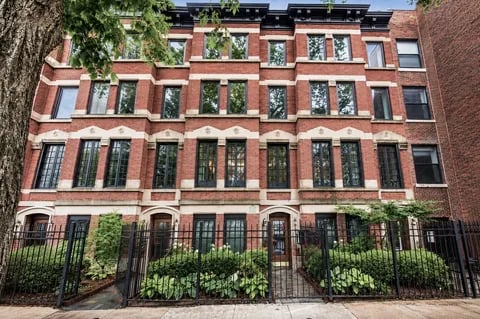
ADU rules vary block by block across Chicago's North Side and North Shore suburbs, and 2026 brought real changes. Chicago's citywide ADU ordinance went permanent on April 1, 2026, expanding eligibility to roughly 60 percent of the city. Evanston has allowed ADUs since 2020. Wilmette permits a version it calls an Accessory Living Unit. Winnetka has historically restricted new coach houses. Glenview, Kenilworth, and Glencoe have no broad ADU ordinance on record, so anyone considering one there needs to confirm directly with the village. If you're weighing a home office, a guest suite, or a small rental unit, the town you buy in decides what's actually possible before you decide what you want to build.
Why This Matters for Remote Workers
A backyard coach house or a converted garage does double duty. It can become the second office your household needs, the guest space for visiting family, or a rental unit that helps offset your mortgage while you work from home full time. But none of that works if the property isn't zoned for it. This is a due diligence step, not an afterthought, and it belongs in your search before you fall for a specific address.
Chicago's North Side (Andersonville, Edgewater, Lake View, Rogers Park, Uptown, North Center, Lincoln Park)
Chicago's ADU ordinance became permanent on April 1, 2026, expanding from the original five pilot areas to about 60 percent of the city's residential land.
- ADUs are allowed by right in RT, RM, and most B and C zoning districts.
- Properties in RS (single-family) zoning need to fall inside an aldermanic opt-in area to qualify.
- Andersonville, Edgewater, and Lake View sat inside the original pilot boundaries, so a meaningful share of these neighborhoods already had ADU activity before the citywide expansion.
- Coach houses are capped at 700 square feet under the city code.
- Some RS-zoned blocks carry limits on how many ADU permits can be issued per year, so a specific address can still be restricted even inside an eligible ward.
Check a specific address using the city's ADU eligibility map before assuming a property qualifies. Eligibility is expanding but it isn't universal yet.
Evanston
Evanston has permitted ADUs since a 2020 ordinance, and it remains one of the more established programs in this corridor.
- Internal ADUs, garage conversions, and detached units are all permitted paths.
- Detached ADUs are capped at 1,000 square feet.
- Parking rules were relaxed in the same ordinance. Homeowners generally only need to maintain existing parking rather than add new spots.
- Owner-occupancy requirements have been a point of ongoing city discussion, so confirm the current rule with Evanston's planning department rather than relying on older summaries.
Wilmette
Wilmette permits a form of ADU it calls an Accessory Living Unit, with its own set of standards for size, placement, and use. Confirm the current version of this ordinance with the village's community development department, since accessory unit rules get revisited more often than most people expect.
Winnetka
Winnetka has historically been the most restrictive town in this corridor. New coach houses were effectively barred decades ago, and existing coach houses were reclassified as legacy, nonconforming structures rather than a path forward for new construction. If a Winnetka listing includes an existing coach house, treat it as a legacy asset with its own rules on repairs and vacancy, not as a template for building a new one elsewhere on the North Shore.
Glenview, Kenilworth, and Glencoe
None of these three villages have a broad, well-documented ADU ordinance on the public record as of this writing. That doesn't necessarily mean an accessory structure is impossible. It means the answer lives with the village's building department, not with a general search. If ADU potential is a real priority for you in one of these towns, build a call to the village into your due diligence before you write an offer.
A Statewide Change Worth Watching
Illinois Governor Pritzker's BUILD housing plan includes a proposal, Senate Bill 4071, that would legalize ADUs in all residential areas statewide and would override local zoning restrictions on them, including in home rule municipalities like Evanston. This hasn't passed as of this writing, but it's a live proposal that could reset every rule listed above. If ADU flexibility matters to your decision, it's worth tracking this bill alongside whatever the local ordinance says today.
What This Means for Your Home Search
Zoning determines what's legally possible. It doesn't tell you whether a specific lot, house, and budget make an ADU practical. Lot size, setback requirements, existing structures, and your own renovation budget all shape whether a coach house or garage conversion is realistic on top of being legal.
If ADU potential is part of what you're looking for, work backward. Confirm the town allows it, confirm the specific property qualifies, and only then start picturing what goes in the backyard.
Thinking about a home with real ADU potential? I can help you narrow your search to properties where it's actually possible, not just theoretically zoned for it. Book a 15-minute call or explore Evanston, Wilmette, and Winnetka listings with dedicated office and guest suite potential.