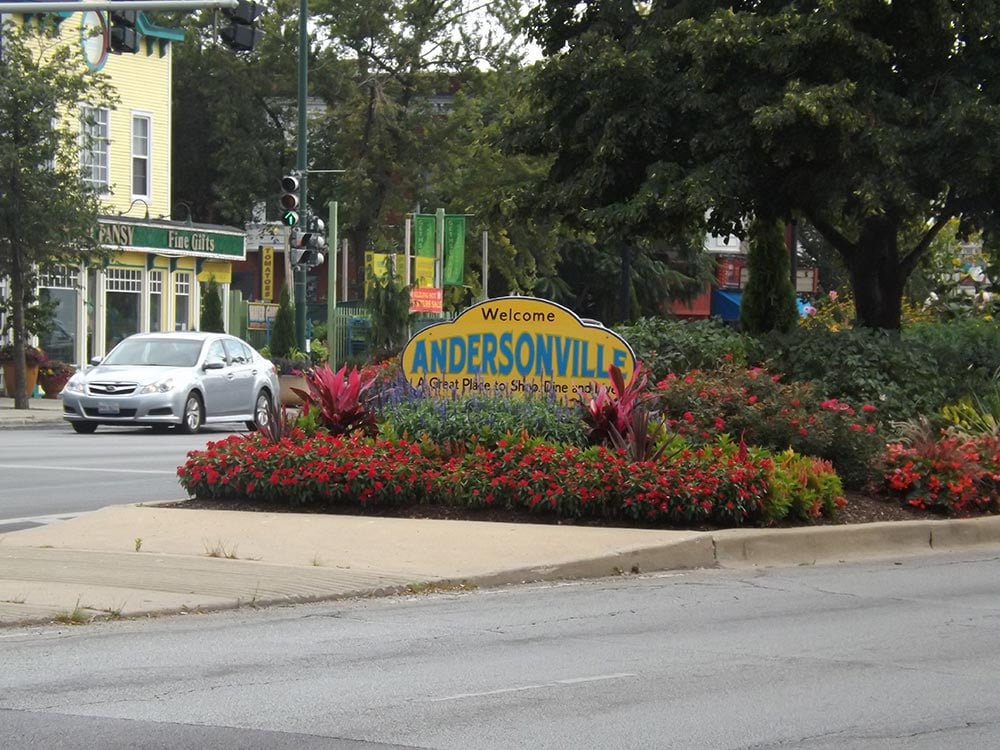
If you're looking for an Andersonville Chicago neighborhood guide that covers more than just where to eat, this is it. Andersonville sits on Chicago's far North Side, straddling the border of Edgewater and Uptown. It has a reputation for independent shops and a deep Swedish history. But what it actually feels like to live here, what you'll pay, what you'll give up, and what you'll get in return, that's what this guide is about.
Table of Contents
- Where Andersonville Starts and Ends
- What You'll Find on Clark Street
- The Swedish Roots Are Still Here
- Entertainment You Won't Find Anywhere Else
- What It's Like to Live in Andersonville
- Real Estate in Andersonville: What You're Actually Buying
- Is Andersonville Right for You?
Where Andersonville Starts and Ends
Clark Street is the spine. The neighborhood runs roughly from Foster Avenue up to Bryn Mawr, with Clark as the main commercial drag. Most of what you'll do day to day happens along this stretch.
Ashland Avenue marks the western edge. The lake is the eastern boundary, though the feel shifts well before you hit the water. The blocks east of Clark get quieter, more residential, with tree-lined streets and three-flats.
The Berwyn Red Line station is the primary transit access point. It was under renovation for a while but is back open now. If you live near Clark, you're within a 15-minute walk of groceries, coffee, dinner, laundry, and the train. That walkability is a big part of why people stay.
What You'll Find on Clark Street
Clark Street is where Andersonville shows its hand. It's a strip of independently owned storefronts, not a mall. The businesses here reflect the people who live in the neighborhood, not a tourism board's idea of what should sell.
Dining Worth the Walk
Hopleaf is the anchor. Belgian beer list, mussels, a crowded bar that somehow always feels right. It's been around long enough to become an institution without feeling tired.
Middle East Bakery has been here for decades. Grab a spinach pie and keep moving. It's the kind of place that becomes part of your Saturday routine without you noticing.
George's Ice Cream is a summer staple. The line moves fast. Kids, couples, solo walkers, everybody ends up there on a warm night.
A handful of newer spots rotate through. Some stick, some don't. That's the nature of a neighborhood that runs on local business. The turnover is part of the ecosystem, not a sign of trouble.
Shops That Make the Neighborhood
Women and Children First is one of Chicago's last independent feminist bookstores. It's been here since the 1970s and it still matters. The staff picks are worth reading. The events draw authors and readers from across the city.
Woolly Mammoth is not for everyone. Taxidermy, antique medical tools, specimens in jars. It's weird and people love it. You'll walk past and either keep walking or spend an hour inside. There's no middle ground.
The "shop local capital" label gets thrown around, but Andersonville earned it. You won't find many chains on Clark. The bookstore, the oddities shop, the bakeries, the vintage stores, they're all one-offs. That's rare in a city where retail strips can start to look the same.
The Swedish Roots Are Still Here
Andersonville was founded by Swedish immigrants in the mid-1800s. At one point it had the second-largest Swedish population in the world after Stockholm. That history didn't get paved over.
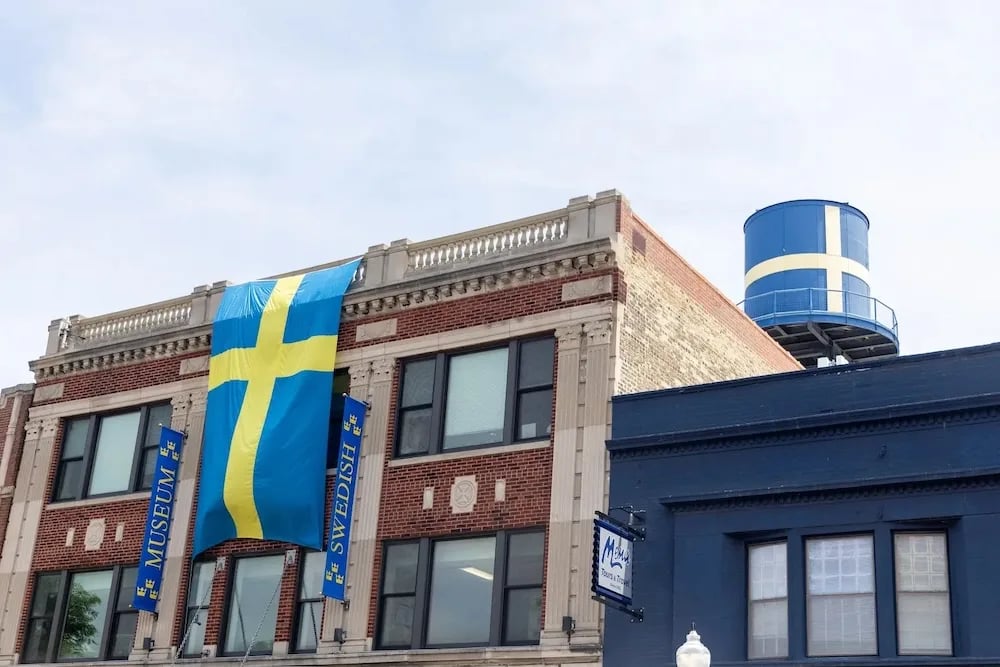
The Swedish American Museum sits on Clark. It's small, worth an hour, and hosts the St. Lucia Festival of Lights every December. Candles, singing, the whole thing. It's not a tourist trap. It's a working museum that the neighborhood actually uses.
Midsommarfest happens every June. It's part Swedish tradition, part Pride celebration, and the whole neighborhood shows up. Clark Street closes down. Music, food, dancing. It's one of those festivals that feels like a block party that got big, not a corporate event that landed on a neighborhood.
You don't have to be Swedish to feel like the history belongs to you. That's the point. The neighborhood holds the history lightly. It's there if you want it. Nobody's performing it.
Entertainment You Won't Find Anywhere Else
Andersonville has two venues that draw from the neighborhood, not just tourists. That tells you something about the people who live here.
Magic, Theater, and Oddities
Chicago Magic Lounge is a dedicated magic venue. Close-up tables, a full stage, and a speakeasy-style entrance through a laundromat facade. It's not a gimmick. The performers are serious. You'll leave wondering how they did half of it.
Neo-Futurist Theater runs The Infinite Wrench, a show made of 30 plays in 60 minutes. Some hit, some miss. That's the format. It's fast, raw, and completely unlike anything else in the city. The theater has been an Andersonville fixture for years.
Both venues exist because the neighborhood supports them. That's the test. Tourists help, but locals fill the seats on a Tuesday.
What It's Like to Live in Andersonville
The day-to-day rhythm here is quieter than you might expect for a neighborhood with this much going on.
Walkability and Daily Life
You can live here without a car if you're near Clark. Groceries, coffee, dinner, laundry, all walkable. The Berwyn stop puts you downtown in about 25 minutes. The bus lines on Clark and Ashland fill in the gaps.
Parking is tight, especially on weekends. If you have a car, budget for a spot or get used to circling. That's the trade-off for a neighborhood built before everyone had two cars.
The Vibe
It's quieter than Lakeview. Less loud on weekend nights. More neighbors know each other by name. You'll see the same faces at the coffee shop, the same dogs on the same routes.
The density is lower than Lincoln Park. More three-flats and courtyard buildings, fewer high-rises. The architecture is vintage Chicago: brick, stone, bay windows, front porches that actually get used.
You get the feeling that people stay here. Turnover is slower than in neighborhoods further south. That's usually a good sign. People don't leave places they like.
Real Estate in Andersonville: What You're Actually Buying
Most of the housing stock is condos in vintage walk-ups and mid-rises. New construction is rare. When it happens, it's small scale, a few units tucked into a lot where something older used to be.
Condos and Co-Ops
Prices typically range from the mid-$300s to around $800K for a two-bedroom. Top-end units in full-amenity buildings can go higher. But the range is wide because the buildings vary widely in quality.
Some have healthy reserves and well-run HOAs. Others are one special assessment away from a headache. I've toured hundreds of condos in this corridor. The difference between a well-managed building and a poorly managed one is everything. It determines whether you love living here or spend two years regretting the purchase.
What to Watch For
Ask about reserves before you ask about the kitchen. A building with three months of operating expenses in the bank is a red flag. You want to see a reserve study and a board that actually funds it. If you're not sure what to look for, I wrote a breakdown on understanding HOA reserves and special assessments in Chicago condos.
Special assessments happen. The question is whether the board plans for them or reacts to them. A good board knows the roof has five years left and budgets accordingly. A bad board waits until it leaks and sends you the bill.
Management quality matters more than square footage. A good manager keeps the building running. A bad one hides problems until you own them. Talk to the manager before you make an offer. Ask how long they've been with the building. Ask about the last capital project. See how they answer.
The North Shore Option
Andersonville isn't the only place worth looking. Evanston is 15 minutes north. Wilmette and Glenview are a bit further. Some buyers start in Andersonville and end up in the suburbs. Others do the reverse. Both are valid.
I work the whole corridor from the North Side neighborhoods up through the North Shore. If you're not sure where you land, we can talk it through. I've helped buyers navigate the transition from city to suburb without the pressure or the pitch. If you want to explore what Evanston or Wilmette actually offer, those pages give you a starting point.
Is Andersonville Right for You?
If you want a neighborhood where you know your neighbors, walk to dinner, and don't have to deal with weekend crowds of bachelorette parties, Andersonville works. It's grown-up without feeling settled. Lively without feeling loud.
If you need a 24-hour gym, a late-night diner, or a building with a doorman, you might find it frustrating. Andersonville doesn't try to be everything. It knows what it is.
The best way to know is to spend an afternoon on Clark. Walk from Foster to Bryn Mawr. Stop at a few shops. Sit at the bar at Hopleaf. See if it feels like you.
If it does, reach out. If it doesn't, that's fine too. I'll tell you straight either way.