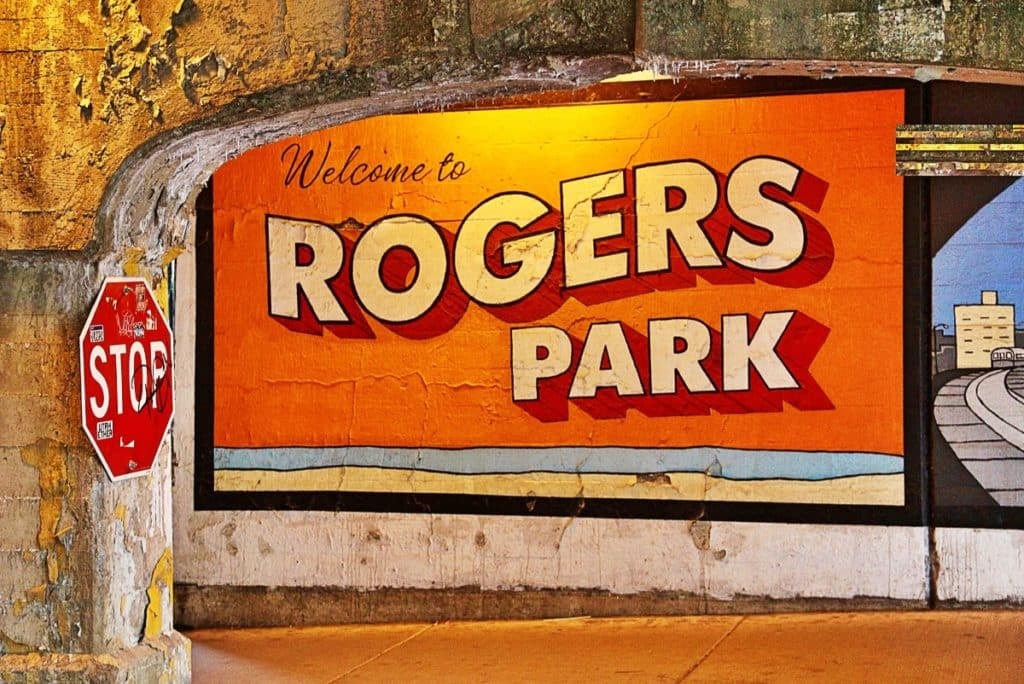
If you're trying to make sense of the Rogers Park real estate market in 2026, you're not alone. You've probably seen numbers that don't add up. One source says the median sale price is $280,000. Another claims $470,000. Someone on social media is worried about a crash. Someone else says now is the time to buy. I'm going to walk you through what the data actually shows, what I'm seeing on the ground, and what matters if you're thinking about buying here. No hype, no vague optimism, just a straight read on the market.
Table of Contents
- What the Numbers Actually Say About Rogers Park Right Now
- Why Inventory Is Tight and What That Means for You
- West Rogers Park vs. Rogers Park: Two Different Stories
- The Rental Market and Why It Matters for Buyers
- Is Rogers Park Gentrifying? Here's What I Actually See
- What Buyers Should Watch For in the Second Half of 2026
- How to Make an Offer That Actually Works in This Market
- The Bottom Line on Rogers Park in 2026
What the Numbers Actually Say About Rogers Park Right Now
Let's start with the numbers that hold up. The median sold price in Rogers Park sits around $280,000, based on Redfin data for the three months ending May 2026. The median listing price is lower, around $260,000. That gap tells you something useful. Sellers are listing at one number and buyers are closing at another, slightly higher one. Homes are selling for roughly what they're listed for, and often a little more.
Year over year, prices are up somewhere between 4% and 6% depending on which dataset you trust. That's steady appreciation, not a spike. It's slower than what we've seen in Edgewater recently, and it's a different world from Lincoln Park or Lakeview, where the entry point is much higher. Rogers Park is still one of the last lakefront neighborhoods where you can buy a condo under $300,000 without needing a full renovation budget on top of it.
Days on market tell the competition story. Homes are moving in 36 to 42 days. That's faster than last year by about two weeks. The sale-to-list price ratio is sitting right around 100% to 101.9%, which means most homes are selling at or just above asking. More than half of all homes sold above list price in the last quarter. Those are seller's market signals, and they're consistent across every major data platform.
Now let's address the Facebook post you might have seen claiming a $470,000 median sale price. That number is real, but it's not representative of the whole Rogers Park market. It almost certainly reflects a narrow slice: single-family homes on specific blocks, or a cluster of higher-end sales that pulled the average up for that agent's dataset. The broader MLS data doesn't support $470,000 as the median for the neighborhood. When you see a number that far off from every other source, ask what it's measuring. Usually it's a segment, not the whole picture.
Rogers Park is a seller's market right now. That's the honest assessment. But that doesn't mean buyers should sit out. It means you need to know what you're walking into and have a plan that isn't just "bid higher."
Why Inventory Is Tight and What That Means for You
Active listings in Rogers Park are down about 23% compared to last year. That's not a fluke and it's not unique to this neighborhood. Inventory is tight across the North Side, and Rogers Park is feeling it. Fewer homes on the market means more people competing for the same units, and that's exactly why 53% of homes are selling above list price.
When supply drops and demand holds steady, prices get pushed up. That's the dynamic right now. But tight inventory also creates a specific kind of pressure. You're scrolling listings, seeing the same ones sit for a week and then disappear, and the next new listing feels urgent. That urgency is real, but it's also the moment where buyers make expensive mistakes.
How to Navigate Low Inventory Without Overpaying
The temptation in a low-inventory market is to bid high and ask questions later. I've watched buyers do it. I've also watched them get the keys and then get a special assessment notice three months in because nobody reviewed the HOA documents before closing.
This is where building-level diligence stops being a nice-to-have and becomes the thing that saves you from a bad purchase. A building with three months of reserves and a roof that hasn't been replaced since the 90s is not worth overpaying for, no matter how competitive the offer situation feels. The unit can look perfect in photos and still be attached to a financial mess.
You need to know which buildings are solid and which ones will cost you later. That means reviewing the HOA reserves, the meeting minutes, and any history of special assessments before you write an offer. Not after. I do this for every client because skipping it isn't worth the risk. In a market where you might pay above list, you should at least know the building can back up the price.
West Rogers Park vs. Rogers Park: Two Different Stories
West Rogers Park saw home prices surge over 50% year over year according to Redfin data. That number jumps off the page, and it needs context. A jump that large usually doesn't mean every home in the area appreciated by half. It means a handful of higher-end sales closed in a short window and pulled the average up significantly. That's how averages work, and it's why medians often tell a clearer story.
The broader Rogers Park market, specifically ZIP code 60626, grew about 17.5% between early 2024 and early 2025. That's strong growth, but it's not explosive. It's the kind of steady appreciation that suggests real demand, not a fluke or a bubble. If you're comparing the two areas, you're looking at two different dynamics. Rogers Park near the lakefront has been desirable for a while. West Rogers Park is catching more attention now, and that's where the bigger percentage swings show up.
What the West Rogers Park Numbers Actually Tell Buyers
If you're looking in West Rogers Park, expect wider price swings from block to block. One street might have three recent sales at $350,000 and the next block over might have nothing under $500,000. That variability is part of a neighborhood where buyer interest is still settling in.
What the surge suggests is that buyers are spreading north and west from the lakefront corridor. They're looking for more space and finding it in West Rogers Park, often at a price point that still compares favorably to Edgewater or Andersonville. That's worth paying attention to if you want more square footage without leaving the neighborhood entirely.
But the same rule applies here as anywhere else. Do your homework on the specific building and block. A 50% year-over-year headline doesn't tell you anything about the condo you're actually considering. Look at the comps for that building, not the neighborhood average.
The Rental Market and Why It Matters for Buyers
Median rent in Rogers Park is $1,695 a month, up about 6.27% from last year. That rent growth matters because it tells you something about demand that sales data alone doesn't capture. People want to live here. They're paying more to rent here than they were a year ago, and that demand flows into the sales market eventually.
For buyers, the math is worth running. Compare $1,695 in rent to a mortgage payment on a $260,000 to $280,000 property. Even with rates above 6%, the monthly payment often comes out close to rent, and you're building equity instead of paying someone else's mortgage. That's not true in every neighborhood on the North Side, but it's still true in Rogers Park for a lot of properties.
For investors, the 7% rule is a quick filter. Annual rent should equal about 7% of the purchase price for a property to cash flow. On a $260,000 property, you'd need $1,517 a month in rent. Actual median rent is $1,695. The numbers work here in a way they don't in neighborhoods where purchase prices have run further ahead of rents.
Is Rogers Park Gentrifying? Here's What I Actually See
You've probably seen the question online: "Is Rogers Park gentrifying?" The answer floating around calls it "sketchy for decades" with "a LOT there to gentrify." That's not wrong, but it's not the whole story either.
Gentrification in Rogers Park is uneven. Some blocks have seen real investment: new construction, renovated buildings, restaurants that draw people from other neighborhoods. Other blocks haven't changed much in years. That patchwork quality is part of what makes Rogers Park feel like Rogers Park. It's not a neighborhood that transformed overnight, and it probably won't.
What I tell buyers is this: don't buy based on what you hope a neighborhood will become in five years. Buy based on what it is now and whether you'd be happy living there today. The changes are real. More development is happening. Transit access is good and getting better with the Red Line nearby. But it's happening slowly, block by block, and that's not a bad thing.
If you're looking for a neighborhood with character and actual diversity, not just the marketing version of it, Rogers Park has that now. It's not waiting to become interesting. It already is. The question is whether the specific block and building you're looking at fits your life as it is, not as you hope it'll be.
What Buyers Should Watch For in the Second Half of 2026
Nobody can predict prices with certainty, and I won't pretend otherwise. But there are signals worth watching if you're planning to buy in the back half of the year.
Mortgage rates above 6% are likely to stay there. That means your buying power is roughly what it's been for the last several months. Don't expect a sudden drop that opens up new price points. Plan your budget around rates where they are, and if they improve, that's a bonus.
Inventory typically picks up slightly in late summer and early fall. More listings mean more options and slightly less competition per property. If you've been frustrated by the lack of choices this spring, late summer might give you more to look at. It won't flip the market from seller to buyer, but it could give you breathing room.
The One Thing That Worries Me
Special assessments are the hidden cost nobody talks about in a hot market. When buildings sell fast, buyers skip the HOA review. They waive the document review period to make their offer more competitive. And then six months after closing, they get a letter saying they owe $15,000 for a roof replacement or tuckpointing project that the board approved two years ago.
This happens more than you'd think. It happens in buildings that look great from the outside. It happens to smart people who got caught up in the pace of the market and didn't want to lose the unit.
I review every building's reserves and recent special assessments before my clients make an offer. That's not negotiable. I've walked away from buildings that looked perfect in photos because the financials told a different story. If your agent isn't doing that, ask why. A quick close isn't worth a bad building.
How to Make an Offer That Actually Works in This Market
With more than half of homes selling above list price, you need a strategy that goes beyond throwing a bigger number at the problem. Price matters, but terms can tip the scales when multiple offers are close.
Flexible closing dates help. If the seller needs time to find their next place, offering a leaseback or a longer close can make your offer more attractive without costing you more money. Proof of funds or a strong pre-approval letter signals that your offer will actually close, which matters to sellers who've had deals fall apart.
But here's where I draw a hard line. Never waive the inspection. Never waive the HOA document review. A quick close isn't worth a bad building, and an inspection is the only way to know what you're actually buying. There are other ways to make your offer competitive without giving up the protections that keep you from walking into a disaster.
Work with an agent who knows which listings are priced fairly and which are testing the market. Some sellers list high because they're not in a hurry. Others list at a number that expects multiple offers. I'll tell you which is which, and I'll tell you if I think a listing is overpriced. That's the job.
The Bottom Line on Rogers Park in 2026
Rogers Park is a solid market for buyers who are patient and prepared. It's not a frenzy, but it's not a bargain basement either. Prices are up, inventory is down, and competition is real. But the neighborhood offers value you won't find in Lakeview or Lincoln Park, and the rental math still favors buying for a lot of people.
If you're thinking about buying here, the best move is to get clear on what you want, get your financing in order, and look at buildings as carefully as you look at the unit itself. The HOA financials matter as much as the countertops. The reserves matter as much as the floor plan.
I'm happy to walk through what the market looks like for your specific situation. No pressure, no pitch. Just a straight conversation about what's realistic and what isn't. If you've been watching listings for a while and want to talk through what you're seeing, you can reach me through my contact page. I'll tell you what I know and what I'd watch out for.


